RouteRTL SDK
RouteRTL is a unified, multi-vendor FPGA SDK engineered for high-efficiency
hardware development. It provides a single CLI (rr) that drives project
generation, simulation, synthesis, and verification across Xilinx, Intel/Altera,
Lattice, and Microchip toolchains.
Owner: Daniel J. Mazure — License: MIT
🚀 Key Features
- Multi-Vendor Support: Seamlessly switch between Xilinx Vivado, Lattice Radiant, Altera Quartus, and Microchip Libero workflows.
- Unified CLI: 42+ commands via
rr(orroutertl) —rr init,rr sim,rr synth,rr lint,rr docker,rr doctor, and more. - Automated Project Generation: Create reproducible projects from a single
project.ymlsource of truth withrr init --template sensor_hub. - Advanced Register Bank System:
- Define registers in human-readable YAML.
- Automatically generate VHDL packages, Python constants, and C headers.
- Built-in versioning and consistency checks.
- Smart Dependency Management:
- Automatic handling of external IP and VHDL libraries.
- Auto-discovery of VHDL library assignments from source files.
- Modern Simulation Environment:
- Cocotb integration for Python-based testbenches.
- Combined VHDL/Verilog/SystemVerilog Support: Test mixed-language designs seamlessly.
- Multiple Backends: NVC (recommended), GHDL, Verilator, and Icarus Verilog.
- Containerized Workflow: Docker environments for all major vendor suites and a lightweight open-source sim container.
Architecture
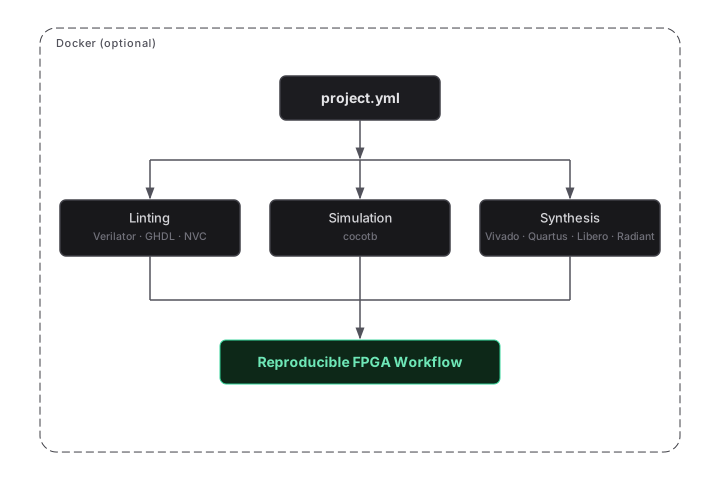
📂 SDK Structure
routertl/
├── sdk/
│   ├── cli/commands/      # CLI command implementations (rr <command>)
│   ├── cli/checks/        # rr doctor health checks
│   ├── engine/            # Core engine: project.yml parsing, build env
│   ├── engine/sim/        # Simulator backends (NVC, GHDL, Verilator, Icarus)
│   └── engine/init/       # rr init project scaffolding
├── routertl_core/         # Compiled core (Cython on release builds)
├── src/units/             # Reusable VHDL/SV utility entities
├── tools/docker/          # Docker environment scripts
├── docs/                  # User documentation
└── pyproject.toml         # Package definition
🛠️ Prerequisites
- Essential: Python 3.10+
- Simulation (pick one):
- NVC (recommended, fastest for VHDL)
- GHDL (alternative VHDL simulator)
- Verilator v5.0+ (Verilog/SystemVerilog)
- Synthesis (as needed):
- Xilinx Vivado
- Intel Quartus Prime
- Lattice Radiant
- Microchip Libero SoC
- Optional: Docker (for containerized builds)
🚦 Getting Started
1. Install
pip install routertl
2. Initialize a Project
rr init --template sensor_hub --name my_project -y
This scaffolds project.yml, Makefile, directory structure, and git hooks.
3. Verify Your Environment
rr doctor
4. Simulate
rr sim                    # Interactive test selection
rr sim --all              # Run all tests
rr sim test_my_module     # Run a specific test
5. Lint & Synthesize
rr lint                   # Smart hierarchical linting
rr synth                  # Synthesize with configured vendor
🐳 Docker Environments
Pre-configured, reproducible build containers for all major EDA tools.
| Environment | Purpose |
|---|---|
sim | Open-source simulation (NVC, GHDL, Verilator, Cocotb) |
vivado | Xilinx FPGA builds (extends sim) |
quartus | Intel/Altera FPGA builds (extends sim) |
radiant | Lattice FPGA builds (extends sim) |
libero | Microchip FPGA builds (extends sim) |
questa | Siemens verification (extends sim) |
buildroot | Embedded Linux cross-compilation |
rr docker install sim      # Install base simulation image
rr docker shell sim        # Interactive shell
rr docker run sim "rr sim --all"   # Run command in container
rr docker status           # Dashboard: volumes, images, health
📚 Documentation
- User Guide — Comprehensive reference
- First Steps Tutorial — 20-minute walkthrough
- Cocotb Quickstart — Simulation guide
- Installation Guide — Detailed install instructions
📜 License
MIT License (Open Shell). PolyForm Shield (Core).